Content for All Sub-Sites (Mandatory)

This is a country specific website of the Gisaid network.
Lorem ipsum dolor sit amet, consetetur sadipscing elitr, sed diam nonumy eirmod tempor invidunt. At vero eos et accusam et justo duo dolores et ea rebum.
In Focus
Recommended composition of influenza virus vaccines for use in the 2027 Southern Hemisphere Influenza Season
(Lyon, France) An advisory group of experts took part in a consultation meeting organized by the WHO Global Influenza Programme between 21-24 September 2026 to analyze influenza virus surveillance data generated by the Global Influenza Surveillance and Response System (GISRS). Their recommendations on the composition of the influenza vaccines for the next Southern hemisphere influenza season were issued on 25 September 2026.
These recommendations are used by the national vaccine regulatory agencies and pharmaceutical companies to develop, produce, and license influenza vaccines. Periodic reevaluation and replacement of viruses on which influenza vaccines are based helps maximize vaccine effectiveness given the dynamic nature of influenza viruses, including those circulating and infecting humans.
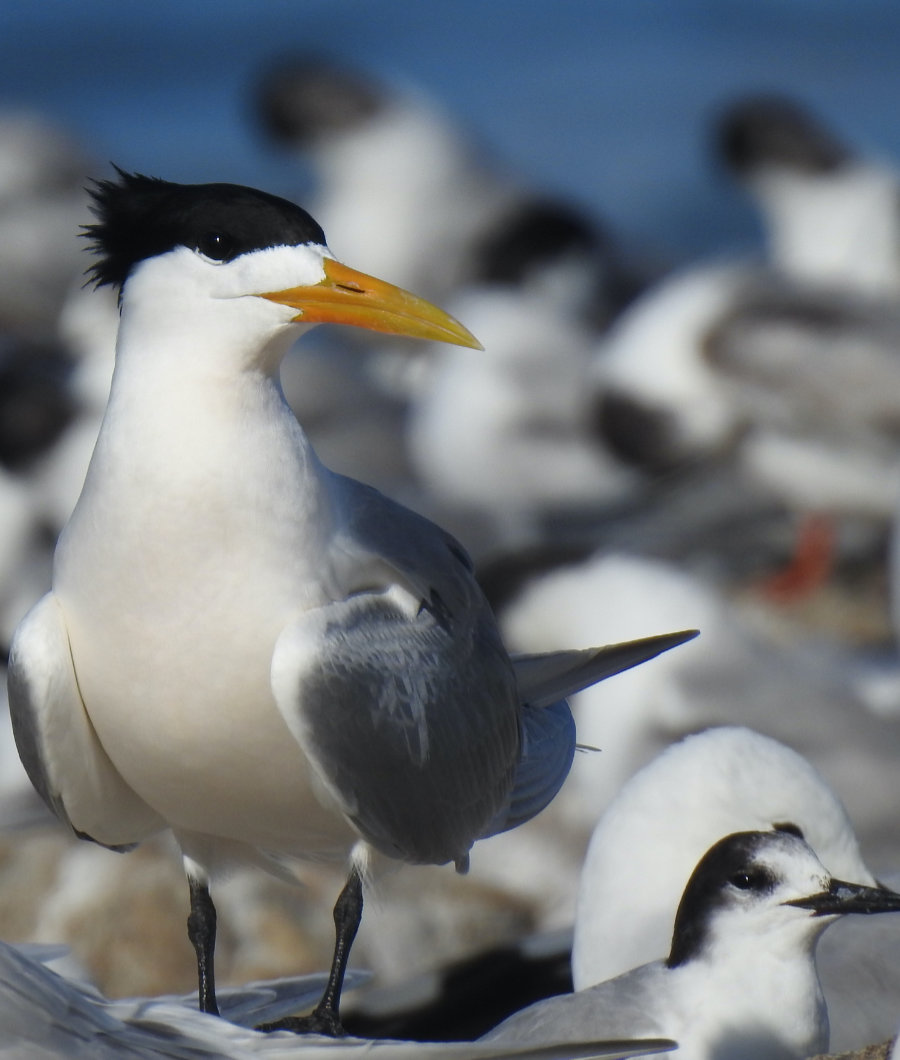
©Matthew Fainman (CCBY4.0)
H5N1 Clade 2.3.4.4b continues to expand across Oceania
Following the first detection of the HPAI H5N1 virus of clade 2.3.4.4b in Australia, new cases continue to be reported in additional locations and species, mostly in waterbirds like skuas, petrels, terns, gulls and little penguins, but also in a bottlenose dolphin, long-nosed fur seals and red foxes.
The virus has also been detected in migratory bird populations in New Zealand and may further spread across Oceania. Data indicates that the virus was brought to Australia and New Zealand by migratory seabirds that breed in the Antarctic region but disperse widely in the non-breeding season.
Clade 2.3.4.4b is the most widely distributed H5 clade around the world. Its increasing host range has also caused frequent spillover into mammals, including distinct avian-to-bovine spillover events in the United States in dairy cows and most recently in captive American mink.
Dr. Eric Karlsson of the Institut Pasteur du Cambodge highlighted during Options XIII, the critical need for timely genomic data sharing to mitigate identified human and animal health risks for an effective One Health response.
H5N1 Bird Flu continues to circulate in the United States
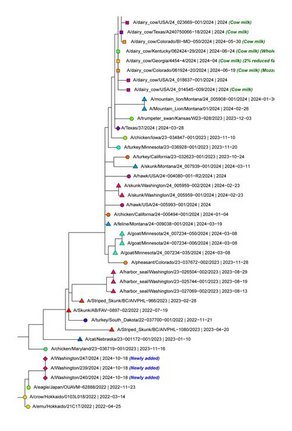
Clade 2.3.4.4b of the highly pathogenic avian influenza (HPAI) virus causing outbreaks in wild and domestic birds around the world continues to spread in dairy cows, poultry and other animals across the United States. Since April 2024, the U.S. CDC confirmed 70 human cases through genome sequence analysis. Data in some of these cases showed the amino acid substitution NA-S247N known to slightly reduce susceptibility to the neuraminidase inhibitor oseltamivir in laboratory tests. In one case, a different change in the polymerase acidic (PA) protein was detected.
On 19 March 2025, the CDC released specimen data from the first human case in Ohio. The specimen sequence belongs to genotype D1.3. Previously the CDC released data from the first human fatality involving a patient from Louisiana that had been exposed to non-commercial backyard poultry and wild birds.
Mpox virus Clade Ib continues to be a closely monitored public health threat
Since November 2023, the Eastern parts of the Democratic Republic of the Congo (DRC) continue to see cases of the mpox virus Clade Ib that is also spreading through regional travel to neighboring countries in Central and Eastern Africa, incl. Burundi, Ethiopia, Kenya, Rwanda and Uganda. Outside of Africa, cases continue to be reported, including in Australia, Austria, Brazil, Canada, China, France, Germany, India, Indonesia, Israel, Italy, Japan, Netherlands, Oman, Pakistan, Portugal, Scotland, Slovakia, Spain, Sweden, Thailand, United Kingdom and the United States.
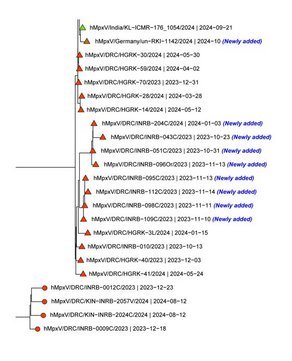
GISAID EpiPox provides access to the largest collection of genome sequences and associated metadata of the mpox viruses, including Clade Ib and recombinant Ib+IIb. Clade Ib continues to demonstrate active geographic expansion and International dissemination across non-endemic regions. While Clade IIb (specifically lineage B.1) accounts for 25.63% of all cumulative genomes deposited in GISAID, Clade Ib comprised 70% of deposited genomes in the platform over the past two months. The phylodynamics of Clade Ib can also be monitored on GISAID's up-to-date phylogenetic trees.

An Equitable Pandemic Accord?
A perspective from a Congolese Researcher
Brazzaville, - Prof. Dr. Francine Ntoumi reflects on her surveillance work in Africa during COVID-19 and shares her views on global health equity, lessons learned, the impact of technology, and the importance of international collaboration and role of GISAID's Regional Hub in Central Africa.
Dr. Francine concludes her perspective with a cautionary reminder of what a global treaty will need to provide. See also: "Data imperialism in a pandemic." On 20. May 2025, the WHO Pandemic Accord was adopted by Member States at the Seventy-eighth World Health Assembly.

Upholding Trust: Inside GISAID’s Decision to Withdraw Data Feeds
During the COVID-19 response, some users with valid GISAID access credentials requested additional permissions, including data feeds to enable, e.g. dashboards to track variant prevalence or visualize the genomic evolution of SARS-CoV-2 across the globe. These requests were granted under supplementary agreements that required strict adherence to GISAID’s terms and assurances against misuse.
Subsequent audits, conducted with external experts and guided by GISAID’s Compliance Board, identified irregularities and breach of agreements which encroached upon contributors’ rights. In such cases, GISAID terminated the data feeds and revoked the supplementary permissions, as usage had diverged from the stated, approved purposes. Their regular access to GISAID, however, remained unaffected.
Despite this, a small but vocal group has circulated claims that access was cut “without justification,” mischaracterizing the circumstances. To uphold transparency and protect its community, GISAID is clarifying the record and sharing representative examples of cases where data feeds were withdrawn due to non-compliance. Read the full statement

CBD Study finds 'GISAID might provide useful lessons and insight to ABS discussions'
A peer-reviewed fact-finding and scoping study on digital sequence information on genetic resources in the context of the Convention on Biological Diversity and the Nagoya Protocol, highlights key advantages of GISAID’s sharing mechanism and a fair and equitable benefit-sharing resulting from access to data.
With the core principals of timely international sharing of health data for protecting populations against lethal infectious disease outbreaks and adherence to scientific etiquette of acknowledgement of the source of data has resulted in global trust and confidence in GISAID.
GISAID Resources

Data Access & Acknowledgement